
The KwaZulu-Natal Sharks Board (KZNSB), formerly known as the Natal Sharks Board and Natal Anti-Shark Measures Board, is an organisation that oversees and implements shark control measures along the coast of KwaZulu-Natal Province in South Africa. Established in 1962, the organisation’s primary objective is to reduce the number of shark attacks and ensure the safety of beachgoers by creating a barrier between humans and sharks in their shared marine environment.
The KZNSB’s headquarters is located in uMhlanga, just north of Durban. Its operations currently cover 37 locations along the province’s coastline, using various methods to achieve its goals, including the deployment of shark nets and drum lines. These measures are designed to minimise human-shark encounters by creating a physical barrier between the animals and popular bathing areas.
In addition to its primary role in shark control, the KZNSB also conducts vital research into shark behaviour and ecology, contributing to a greater understanding of these often-misunderstood creatures. This research includes monitoring shark populations and migration patterns, investigating factors that contribute to shark attacks, and exploring non-lethal alternatives to traditional shark control methods.
The organisation also places significant emphasis on promoting public awareness and education about sharks and their essential role in the marine ecosystem. Through various initiatives and outreach programs, the KZNSB aims to dispel common misconceptions about sharks, promote responsible behaviour in the water, and encourage conservation efforts to protect these apex predators.
Despite its stated goals, the KZNSB’s “shark control” program has been labelled a shark cull by some critics due to the potential for nets and drum lines to harm or kill sharks and other marine animals inadvertently. While acknowledging these concerns, the organisation maintains that it is committed to minimising the environmental impact of its activities while striving to strike a balance between human safety and conservation.
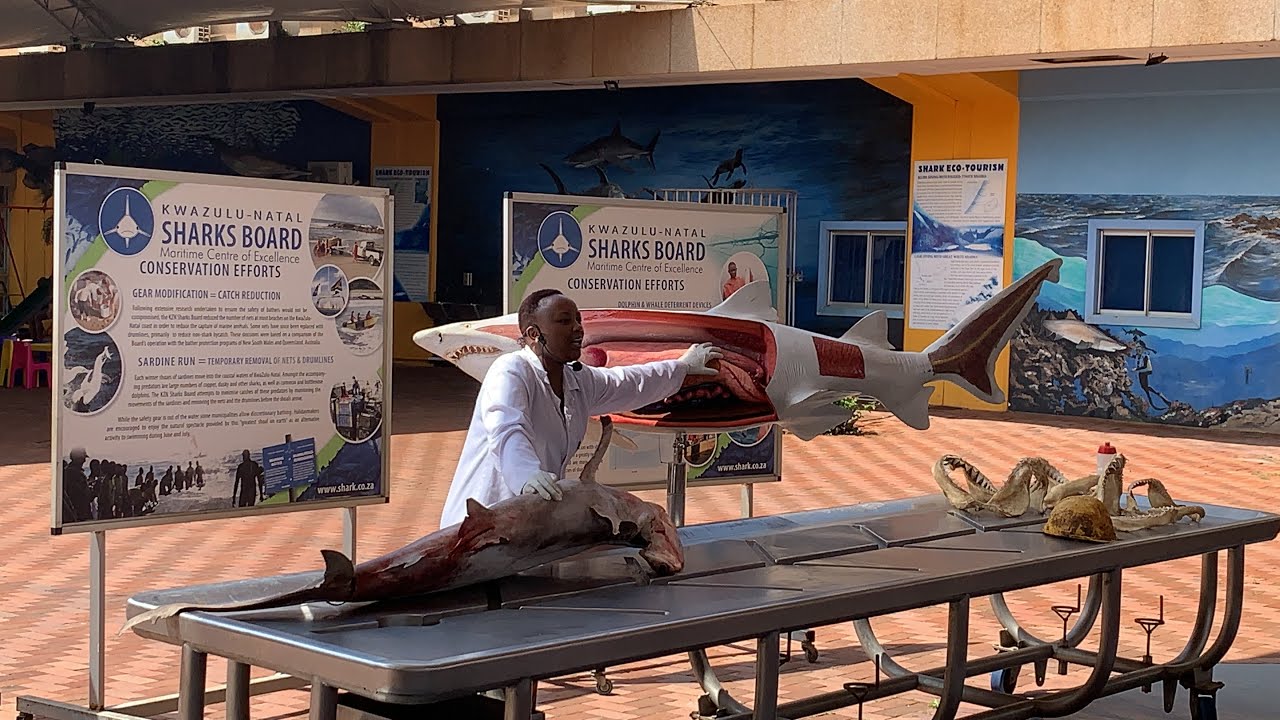
One aspect of the KZNSB’s work that has attracted controversy is its use of deceased sharks as part of educational displays. Supporters argue that these displays serve a valuable purpose in educating the public about sharks, their anatomy, and their importance within the marine environment. However, critics contend that such practices perpetuate negative attitudes towards sharks and undermine broader conservation efforts.
The KZNSB is governed by a board of directors appointed by the Minister of Environmental Affairs and is funded by various sources, including the South African government and local municipalities. The organisation collaborates closely with other stakeholders, including conservation groups, tourism agencies, and research institutions, to achieve its objectives and ensure a holistic approach to shark management and conservation.
In conclusion, the KwaZulu-Natal Sharks Board plays a vital role in ensuring the safety of beachgoers in South Africa’s KwaZulu-Natal Province through its unique “shark control” program. By combining research, public education, and practical measures to minimise human-shark interactions, the organisation contributes to a greater understanding of sharks and their significance within the marine environment. As conservation concerns continue to shape global attitudes towards sharks, the KZNSB will undoubtedly play a crucial part in shaping the future of shark management and protection in South Africa.