Overview:
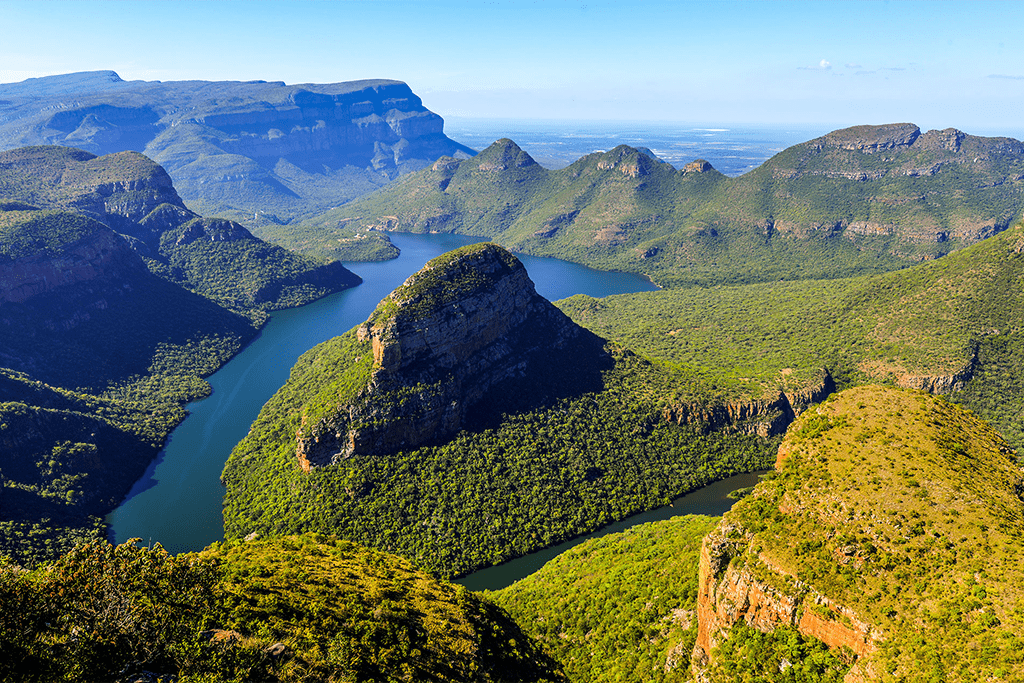
The Blyde River Canyon, located in the Mpumalanga province of South Africa, is a breathtaking natural wonder that offers a unique blend of stunning landscapes, rich biodiversity, and captivating history. As the third largest canyon in the world, the Blyde River Canyon stretches over 25 kilometers and reaches depths of up to 750 meters. Its lush greenery, dramatic rock formations, and winding rivers make it a must-visit destination for nature lovers and adventure seekers alike.
Unique Features and Attractions:
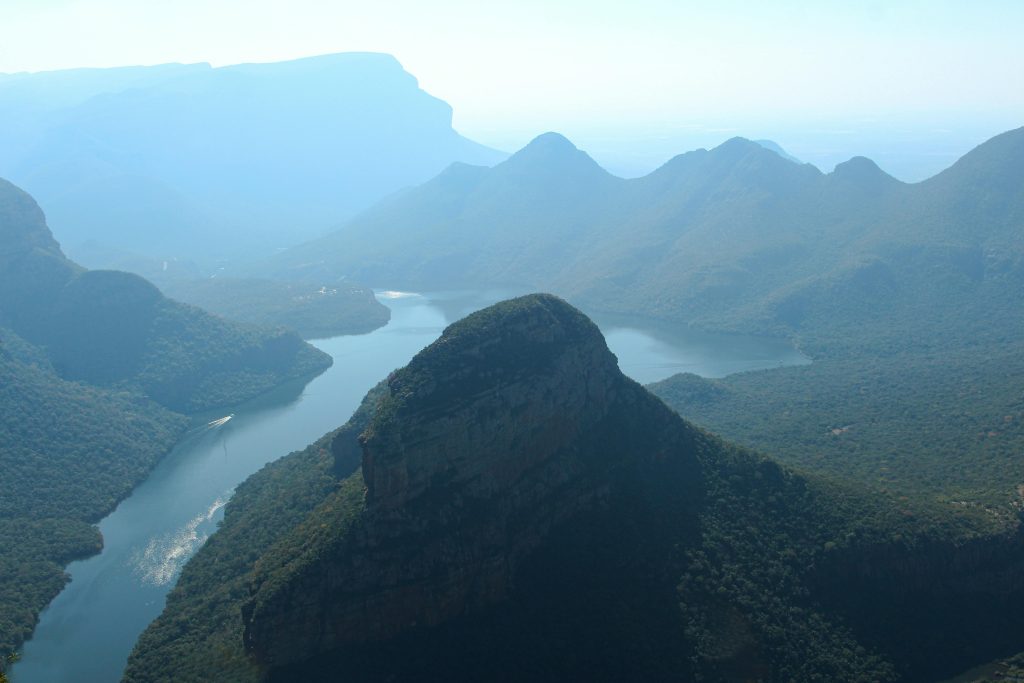
- The Three Rondavels – These massive, round-shaped rock formations are a hallmark of the Blyde River Canyon. Resembling traditional African huts, the Three Rondavels offer a picturesque photo opportunity and a glimpse into the canyon’s geological history.
- Bourke’s Luck Potholes – Named after a gold prospector named Tom Bourke, these cylindrical potholes were formed by centuries of swirling water eroding the rock. Visitors can explore the intricate network of interconnected pools and bridges via a series of walkways.
- God’s Window – A breathtaking vantage point situated on the edge of the escarpment, God’s Window offers panoramic views of the Lowveld and the majestic canyon below.
- Waterfalls – The Blyde River Canyon is home to numerous cascading waterfalls, including the Lisbon Falls, Berlin Falls, and the Mac Mac Falls, providing ample opportunities for picnics, hikes, and photo opportunities.
Visiting Tips:
The best time to visit the Blyde River Canyon is during the dry winter months (May to August) when the weather is mild and the visibility is optimal. The canyon can be accessed via the scenic Panorama Route, which connects various viewpoints and attractions along the way. Entrance fees may apply for certain points of interest, and visitors are encouraged to practice sustainable travel by respecting the local wildlife and environment.
Local History and Culture:
The Blyde River Canyon is steeped in local history, with evidence of human habitation dating back thousands of years. The area is home to various indigenous groups, including the Pedi and Swazi peoples, who have passed down their cultural traditions through generations. Today, visitors can experience the local culture through music, dance, and traditional crafts, which continue to thrive in the surrounding communities.
Sustainable Travel Tips:
To ensure that the Blyde River Canyon remains a pristine natural wonder for generations to come, visitors should adhere to sustainable travel practices, such as:
- Disposing of litter responsibly and recycling when possible
- Respecting wildlife by maintaining a safe distance and not feeding animals
- Supporting local communities by purchasing handicrafts and souvenirs from local artisans
- Choosing eco-friendly accommodations and tour operators that prioritize sustainability
In conclusion, the Blyde River Canyon is a captivating destination that offers an unforgettable blend of natural beauty, rich history, and vibrant culture. By following sustainable travel practices and immersing oneself in the unique experiences this South African gem has to offer, visitors will undoubtedly leave with lasting memories and a newfound appreciation for the wonders of the natural world.